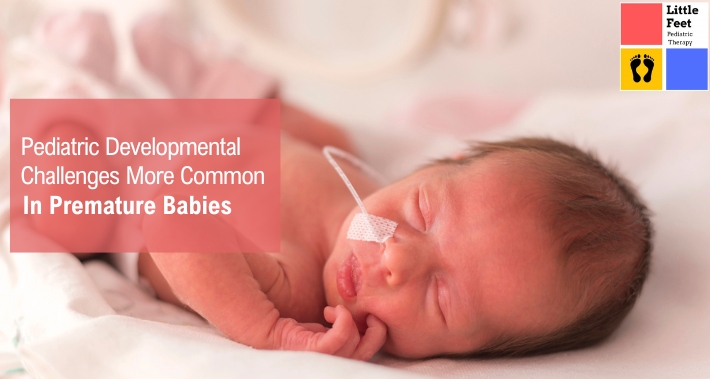
A full term pregnancy is one that lasts about 40 weeks, or 280 days.
If your baby is born at 37 weeks or sooner, however, they’re considered to be premature.
It’s important to remember that most premature babies grow up to develop without any disabilities or conditions.
However, premature babies are at a higher risk of some conditions.
If your child was born prematurely, pediatric physical therapy and pediatric occupational therapy can help address any developmental differences they may have.
At Little Feet Therapy, we’re a pediatric therapy clinic for children with disabilities, and can provide treatment solutions for a wide range of conditions they may be experiencing.
Today, we’re going to be taking a look at some pediatric developmental challenges that are more common in premature babies, and how pediatric therapy can help.
What Is Considered A Premature Birth?
Premature birth, or infant prematurity, occurs when babies are born before the end of the typical gestation period of about 40 weeks.
A birth before 37 weeks is considered premature.
Babies born between 34 to 37 weeks are referred to as late preterm babies.
They weigh more than babies born earlier, but may still experience health complications.
There are numerous possible causes and risk factors associated with premature birth, such as genetics or environmental factors.
But anyone can give birth prematurely, whether they’re at risk or not.
Thanks to advances in modern medicine, the survival rate of premature babies has increased.
However, when a baby is born prematurely, they may have compilations with breathing, maintaining body temperature, and feeding, as well as face long term developmental disabilities.
How Can Premature Birth Affect Babies?
There are a number of pediatric conditions premature babies are more likely to have.
Let’s take a closer look at some of the developmental challenges your premature baby might face, and how pediatric therapy can help.
1. ADHD
Another developmental condition that can affect premature babies is ADHD.
ADHD is a neurodevelopmental disorder that causes high levels of impulsivity and hyperactivity.
The exact cause of ADHD isn’t known.
But we think it’s a combination of factors, including genetic, neurological, and environmental.
If your child has ADHD, they may have difficulty with staying focused on tasks or sitting still.
They might also suffer from reduced self-esteem, communication and social issues, and decreased academic performance.
There are three types of ADHD that can affect each person differently.
They are:
- Predominantly inattentive
- Predominantly hyperactive & impulsive
- Combined
Each type has different associated signs that require a tailored approach in regards to therapy treatments.
However, some general signs of ADHD may include:
- Difficulty focusing or concentrating on tasks
- Being easily distracted
- Difficulty sitting still
- Forgetfulness
- Interrupting others
- Talking excessively
- Impatience
- Impulsivity
- Frequently losing things
RELATED ARTICLE: How Can ADHD Affect Your Child’s Social Skills?
How Can Pediatric Therapy Help?
Pediatric occupational therapy and physical therapy can provide treatment solutions for a wide range of ADHD related symptoms.
Pediatric occupational therapy can help your child develop their:
- Time processing and management abilities
- Organizational skills
- Executive function skills
- Social skills
Additionally, pediatric physical therapy can help children with ADHD develop their gross motor skills and coordination.
A physical therapist will also work with your child to implement regular physical activity and exercise routines.
This can help improve their information processing, attention span, and behavior.
Physical activity can also help reduce stress, mental health issues, and cognitive dysfunction.
2. Autism Spectrum
Autism spectrum disorder, or just autism, is a form of neurodiversity.
That means it affects the way the brain develops.
It can cause differences with communication and social skills, lead to repetitive behavior, and a host of other traits.
A 2017 meta analysis by Wang Et. Al. found that children born prematurely are 30% more likely to be autistic than average.
General signs of autism may include:
- Difficulty creating and maintaining social relationships
- Difficulty making eye contact
- Difficulty expressing emotions
- Difficulty expressing needs and wants
- Oversharing interests
- Difficulty picking up on social or conversational cues
- Repeating specific movements or actions
- Repeating specific phrases
- Hyper focusing on their interests and activities
- Poor balance and/or coordination
- Poor posture
- Resistance to change their schedule or routine
- Fine motor skills differences
- Gross motor skills differences
Most of these will be more obvious as your child gets older.
However, if your baby was born premature and is still an infant, there are some early signs and symptoms of autism that you can detect.
These may include:
- Not crying
- Not making eye contact
- Not making facial expressions
- Not following commands
- Lack of interest in playing with toys
- Not gesturing or pointing
- Not laughing
- Not recognizing their name
RELATED ARTICLE: 5 Tips For Communicating Better With Your Autistic Child
How Can Pediatric Therapy Help?
Because autism is on a spectrum and affects each child uniquely, pediatric therapy treatments for autism are tailored to address your child’s specific needs.
Pediatric physical therapy for autism focuses on developing your child’s gross motor skills.
This can include things like:
- Posture
- Balance
- Running
- Jumping
- Navigating the world
The aim of pediatric physical therapy for autism is to help your child develop their gross motor skills in order to participate at home and at school as best as they possibly can.
Pediatric occupational therapy for autism focuses on developing your child’s fine motor skills, as well as their social skills.
Autistic children can have differences in their coordination, communication, and social skills.
Pediatric occupational therapy can help them develop things like:
- Social and communication skills
- Self care skills
- Sensory processing
- Personal hygiene skills
- Writing
- Fine motor skills, like tying their shoes or throwing a ball
- And many more
Pediatric therapy for autism can help your child develop their skills and live a more independent life.
3. Cerebral Palsy
Cerebral palsy is a group of conditions that can affect posture, muscle movement, muscle tone, balance, and coordination.
The most common known cause of cerebral palsy is traumatic brain injury, either in utero or shortly after birth.
However, premature birth is also a significant risk factor.
It’s not a progressive disorder, meaning it doesn’t get worse over time.
But children with cerebral palsy may experience developmental challenges as they grow older.
There are several types of cerebral palsy, including:
- Spastic cerebral palsy
- Dyskinetic cerebral palsy
- Ataxic cerebral palsy
- Mixed cerebral palsy
- Hypotonic cerebral palsy
Each type of cerebral palsy affects the body differently and has different characteristics.
Some general signs and symptoms of cerebral palsy can include:
- Developmental delays
- Low muscle tone
- Speech and language delays
- Muscle coordination issues
- Involuntary movements
- Tremors
- Trouble swallowing
- Intellectual disabilities
How Can Pediatric Therapy Help?
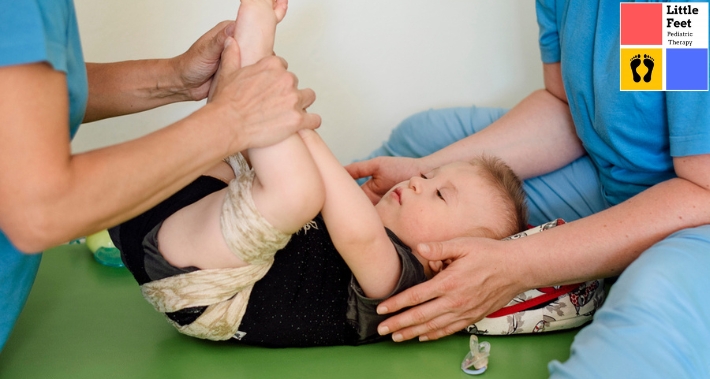
If your child has been diagnosed with cerebral palsy, pediatric physical therapy and occupational therapy can help.
Pediatric physical therapy can help your child gain muscle strength and movement so that they can better navigate the world.
Specifically, pediatric physical therapy for cerebral palsy can include:
- Developmental delays
- Mobility
- Gross motor skills development and coordination
- Balance
- Wheelchair and/or orthotics fitting
It can also help by recommending environmental changes tailored to your child’s specific needs.
This can help improve comfortable and support them towards reaching developmental milestones.
Pediatric occupational therapy can also help your child develop their ability to perform daily tasks, improve their cognitive function, and become more independent.
Pediatric occupational therapy for cerebral palsy can help address things like:
- Developmental delays
- Using tools, like a phone or computer
- Improving handwriting
- Self care skills
- Social development skills
Pediatric therapy for cerebral palsy can help your child achieve developmental milestones and have more freedom in their life.
4. Other Health Concerns
Aside from potential pediatric developmental challenges, premature babies may face several other health concerns as well.
Jaundice occurs when the liver can’t get rid of bilirubin from the body, a substance produced during the breakdown of red blood cells.
Excess bilirubin in the body can cause the skin to turn yellowish.
While jaundice isn’t usually too serious of a problem, if left untreated, bilirubin can build in the brain and cause brain damage.
Premature babies are also susceptible to a wide range of infections.
This is because they have a less developed immune system.
Additionally, premature babies often require numerous medical procedures.
Whenever a medical procedure is performed, there is a risk of bacteria, viruses, or fungi being introduced into the baby’s system, which can cause infections.
There are many other potential health concerns that can affect premature babies.
While we could write a separate article for each one, let’s quickly list some of them.
If your baby is born premature, they’re at greater risk of challenges with their:
- Lungs
- Heart
- Brain
- Vision
- Hearing
- Teeth
- Kidney
Book Your Appointment With Little Feet Pediatric Therapy Today
We don’t want to scare you!
Most premature babies will not face the above challenges.
But if your child was born prematurely and you’re concerned that they aren’t reaching their physical developmental milestones or occupational developmental milestones, we can help.
Pediatric therapy can help address a wide range of developmental challenges your child may face.
At Little Feet Therapy, we specialize in physical therapy and occupational therapy for children to help them develop their abilities and be more independent.
Book your appointment with Little Feet Therapy today, to get started.
► Washington, DC Clinic
► Charlotte, NC Clinic
► Raleigh, NC Clinic
► St. Louis, MO Clinic
Founded in 2019, Little Feet Therapy offers on site pediatric physical and occupational therapy treatments for children from 2 months to 18 years old with physical and developmental concerns. Our clinics focus on providing therapy in a child’s natural setting where your child is in familiar surroundings, it puts their mind at ease and helps them focus more on the work they’re doing with their pediatric therapist. Our therapists will work with your child at your home, at school, at daycare, or another place in the community where they feel most comfortable.