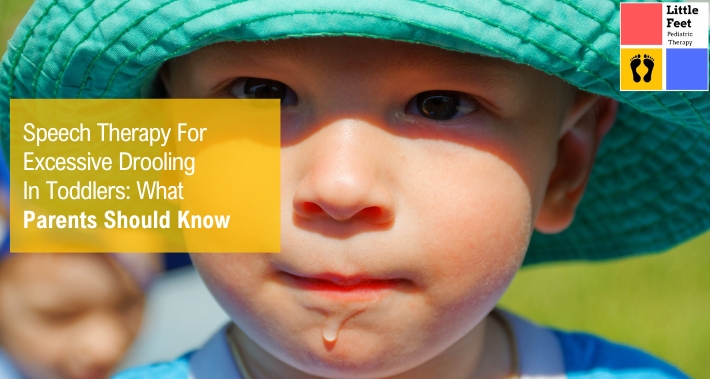
Babies and drooling go hand in hand.
It’s just one of the unavoidable aspects of infancy.
There’re a few reasons why babies drool so much.
For one, they have undeveloped salivary glands and thus produce more saliva than older kids and adults.
Babies also experience an increase and saliva production when they’re teething.
Without fully developed mouth muscles necessary for efficiently swallowing, this increase in saliva production results in drooling.
In most instances, drooling during infancy is completely normal and something that your child will likely grow out of.
But what happens when your child continues to drool into toddlerhood and beyond?
If your child isn’t growing out of their drooling habits, they might be dealing with sialorrhea, or hypersalivation.
Intervention for excessive drooling largely depends on the underlying cause.
Pediatric speech therapists can provide solutions for a wide variety of conditions that cause excessive drooling in toddlers.
In this article, we explore some possible reasons for your child’s excessive drooling and how a speech therapist can help.
How To Know If Drooling Is Excessive?
Before we discuss how you can determine if your child’s drooling is excessive, let’s explore the role of salivation.
Saliva is an essential component of your digestion system.
It has multiple functions.
For instance, your mouth relies on saliva to break down food particles and protect your teeth from bacterial build up.
It also helps lubricate the food you eat to allow for easy swallowing.
Finally, saliva prevents your mouth from drying out.
But what exactly is saliva in the first place?
Well, it’s primarily water, but also carries trace amounts of other substances, including:
- Electrolytes
- Mucus
- White blood cells
- Epithelial cells
- Enzymes
- Antimicrobial agents
Your mouth’s salivary glands secrete saliva to help with speech, eating, and digestion.
However, too much saliva can cause negative side effects, such as skin irritation, social ostracization, and increased risk of aspiration and pneumonia.
Typically, we consider drooling excessive when it’s spilling from your child’s mouth, onto their face and clothing.
Subsequently, toddlers with excessive drooling also face challenges with cleanliness, skin care, and socialization.
When Do Kids Usually Grow Out Of Drooling?
You can expect your baby to drool up until the age of 2.
This is the age where we typically expect to see saliva production slowing down as well as an increase in orofacial muscle development.
You might also notice that your child experiences a temporary increase in drooling during their teething phase.
However, this increased saliva production generally slows down after all their baby teeth come in.
Some toddlers continue to drool until the age of 4.
However, they won’t likely drool as much or as uncontrollably as they did in their younger years.
If you’re noticing that your child is drooling excessively past this age, you might consider bringing them into a speech therapist for an evaluation.
Causes Of Excessive Drooling
A variety of different factors can cause excessive drooling in toddlers.
Below, we’ll take a closer look at some of the most common causes.
1. Pediatric Dysphagia
Pediatric dysphagia is a condition that affects your child’s feeding and swallowing skills.
Children with this condition experience challenges during mealtimes and are at higher risk for getting food or drinks stuck in their windpipes.
Pediatric dysphagia has a number of different symptoms.
For instance, many children with this condition experience breathing complications while eating or drinking that may lead to subsequent choking or coughing.
This may also cause food or liquid spillage when eating, which can worsen excessive drooling.
They may also produce certain sounds when eating, such as noisy or wet vocalizations.
Many children with this condition also develop certain food aversions, particularly for foods that worsen their symptoms.
For instance, they might refuse foods of certain textures, only eat in very small amounts, and cry or exhibit other anxiety symptoms during mealtimes.
RELATED ARTICLE: How To Deal Aith A Child Who’s A Picky Eater
Other symptoms of pediatric dysphagia include:
- Gagging or vomiting
- Back arching while chewing and swallowing
- Pocketing food
- Eating very slowly
- Trouble chewing age appropriate food
- Congestion
- Drooling
Many different factors may contribute to the development of pediatric dysphagia.
Examples include:
- Traumatic brain injuries
- Chemotherapy side effects
- Developmental differences, such as autism
- Cleft lip or cleft palate
- Sensory processing disorder
- Low muscle tone (hypotonia)
- Low birth weight
- Genetic conditions, such as Down syndrome
- Cerebral palsy
- Torticollis
- Bell’s palsy, or other oral facial muscular conditions
2. Orofacial Myofunctional Disorders
Orofacial myofunctional disorders refer to a group of conditions that cause weakened orofacial muscles.
Subsequently, children with these conditions exhibit atypical facial and oral movements.
Orofacial myofunctional disorders often cause challenges with nose breathing, speech production, and eating.
Thus, drooling is a common symptom of these disorders.
Examples of orofacial myofunctional disorders include tongue thrust, tongue tie, and lip tie.
Symptoms largely depend on the specific type of orofacial myofunctional disorder; however, some common symptoms may include:
- Mouth breathing
- Altered tongue movements (ex: tongue tie)
- Messy eating
- An overbite, underbite, or other dental complications
- Tongue pushing against teeth
- Difficulty making certain speaking sounds, such as ‘s’, ‘sh’, and ‘j’
- Difficulty closing lips while eating and swallowing
Factors that may contribute to the development of orofacial myofunctional disorders include:
- Enlarged tonsils
- Nasal passage blockage
- Allergies
- Thumb sucking or prolonged pacifier use
3. Other Causes
Drooling is a general symptom common amongst a wide range of other conditions.
Some examples include:
- Brain disorders, such as cerebral palsy
- Strep throat
- Mononucleosis
- Peritonsillar abscess
- Sinus infection
- Tonsilitis
- Allergies
- Poisoning
- Side effects of certain medications, such as certain antipsychotics
- Swollen adenoids

How Can A Speech Therapist Help Treat Excessive Drooling?
A speech therapist can help with both diagnosis and treatment for a wide range of conditions and disorders that cause drooling.
Your speech therapist will begin by conducting an evaluation to determine the potential cause(s) of your toddler’s excessive drooling.
From there, they’ll put together an individualized plan that focuses on your child’s specific diagnosis.
For instance, they can help children who drool due to low muscle tone by introducing oral exercises that will help strengthen their mouth, lips, and swallowing muscles.
They can also help address feeding challenges by practicing feeding strategies, such as pacing and modelling.
If necessary, a speech therapist can recommend certain diet and feeding alterations to reduce instances of drooling.
Book Your Appointment With Our Pediatric Therapy Clinic Today
Excessive drooling can be frustrating for both toddlers and their families, but it’s not something you have to manage alone.
Whether it’s caused by muscle weakness, feeding difficulties, or another underlying condition, early intervention can make a big difference.
At Little Feet Pediatric Therapy, our experienced team of therapists create personalized treatment plans to help your child build strength, improve function, and feel more comfortable in their daily life.
With the right support, your child can make meaningful progress.
Book your appointment today and let’s work together to support your child’s development.
► Washington, DC Clinic
► Charlotte, NC Clinic
► Raleigh, NC Clinic
► St. Louis, MO Clinic
Founded in 2019, Little Feet Therapy offers on site pediatric physical and occupational therapy treatments for children from 2 months to 18 years old with physical and developmental concerns. Our clinics focus on providing therapy in a child’s natural setting where your child is in familiar surroundings, it puts their mind at ease and helps them focus more on the work they’re doing with their pediatric therapist. Our therapists will work with your child at your home, at school, at daycare, or another place in the community where they feel most comfortable.